

Retail sales are great. They’re also unpredictable.
Foot traffic fluctuates. Weather changes demand. And there’s only so much volume a pastry case can hold.
That’s why I encourage bakery owners to diversify their income streams, especially through catering, experiences, and digital products that create more stability over time.
Lately, I’ve noticed three intriguing models reshaping how food businesses grow. Many started with home and cottage bakers, but the ideas translate surprisingly well to local bakery and coffee shop owners who are looking to grow creatively.
What’s interesting is that these aren’t isolated trends. They form an ecosystem:
community → audience → revenue opportunities
Here’s what it looks like:
1. Apartment cafés and private gatherings
Food creators, recipe developers, and home bakers are hosting private “apartment café” gatherings: invite-only events where their network brings baked goods or recipes to share, often in a potluck-style format.
Hosts roll out kraft paper, label each item, document the experience with photos, and sometimes create branded touches like stamped coffee cups or tote bags. The goal isn’t immediate revenue. It’s community and collaboration.
These gatherings:
bring their network together in real life
introduce each creator to new audiences
generate content and storytelling
build momentum for future opportunities
Think of it as the culinary version of Hype House (yes, from OG TikTok).
When done consistently, they often lead to paid outcomes. Think: sponsored events from flour, milk, or butter brands, public pop-ups, cookbook deals, or partnerships with brick-and-mortar businesses.
Examples worth studying:
Ryan Nordheimer from Apartment Café → one of the earliest hosts building online momentum through thoughtful, well-documented gatherings.
Morning Jay’s → consistent events that translate into storytelling, recipe testing, audience growth, and exclusive pop-ups for fans.
Emilia Marie from Baker’s Library → a strong visual identity paired with cozy food and crafts, making the experience both memorable and shareable.
These are primarily creator-led gatherings for personal networks in private spaces. But retail bakeries can apply the underlying principle:
Intimate experiences build audience and demand.
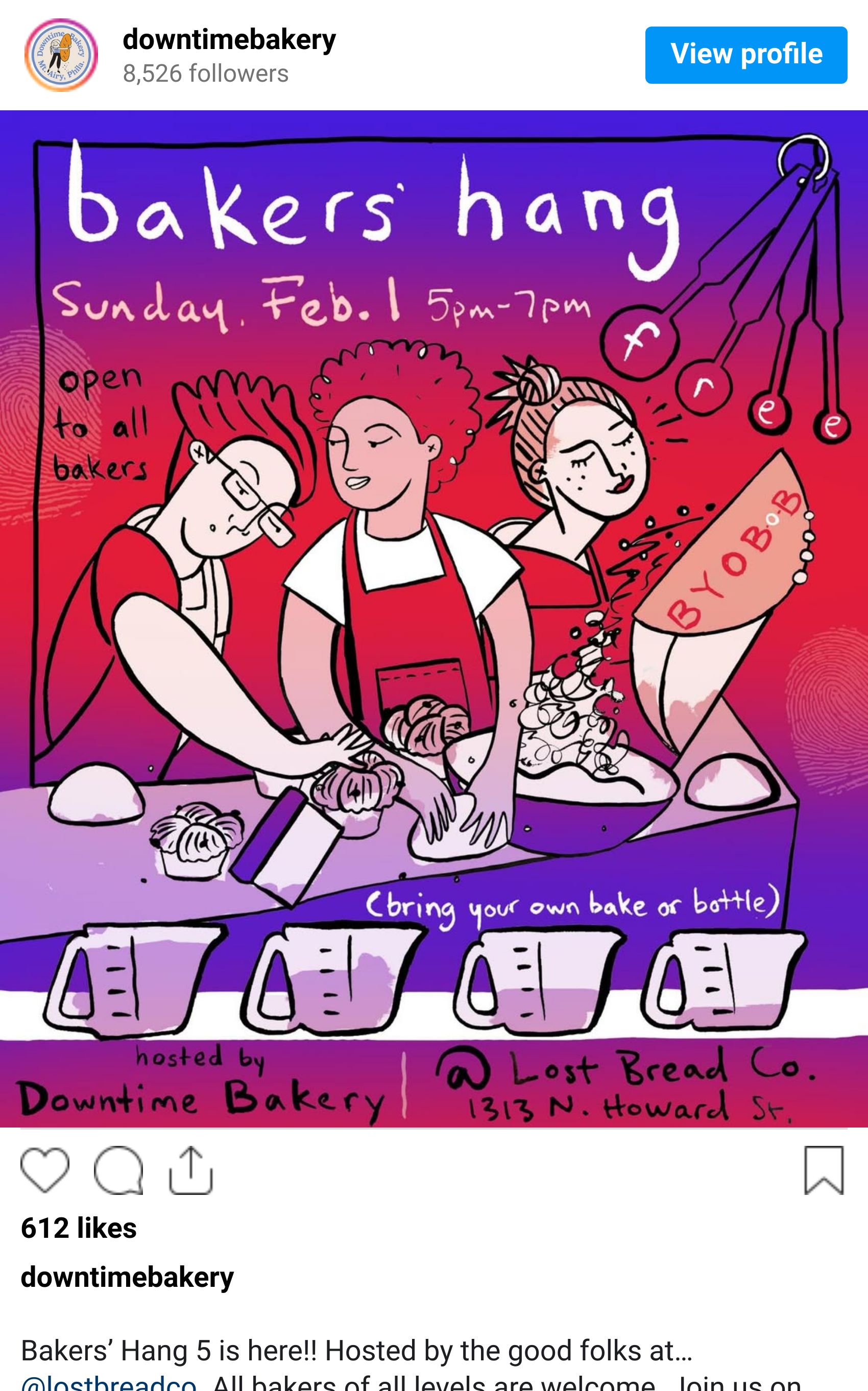
Downtime Bakery does this beautifully with their monthly Bakers’ Hang gatherings and public nighttime markets. Instead of focusing solely on transactions, they use their physical space to bring the baking community together and create new touchpoints with their brand.
Notice the pattern: connection comes first. Monetization follows.
2. Structured Connection Experiences (“Dinner With Strangers”)
While apartment cafés bring together a creator’s existing network, a related trend is emerging inside established restaurants and cafés: structured gatherings designed specifically for strangers to meet.
Instead of hosting friends or peers, operators create shared tables, guided meals, or conversation-driven experiences where guests arrive solo and connect through food.
After years of pandemic isolation and digital overload, customers are actively seeking real-world interaction. Not just a place to eat, but a place to belong.
These experiences build strong emotional loyalty while creating demand that often exceeds capacity.
Why It Works
These experiences meet a growing need for:
Community and belonging
Screen-free interaction
Shared experiences with new people
Hospitality that feels intentional rather than transactional
For bakeries and coffee shops, this trend also solves a practical challenge: how to use your space beyond peak morning hours.
Afternoon and evening events can generate incremental revenue, introduce new customers to your brand, and strengthen community ties.
The operational lift is often minimal. A reserved table, clear structure, and simple facilitation are enough.
Examples worth studying:
Mission Taqueria (Philadelphia) → hosts a monthly dinner called “Free Association” for 11 solo guests. No phones allowed. Seat swapping required. More than 1,000 people typically apply for each event.
Kinsco Cafe (Chicago pop-up bakery) → runs “Dine With Six Strangers” gatherings where guests connect over pastries, tea, or coffee. Low-cost tickets ($12–$15) make participation accessible.
The experiences create connection. But connection alone isn’t enough unless you can stay in touch.
That’s why many food creators, recipe developers, and operators are building owned audiences through newsletters and blogs — turning one-time interactions into ongoing relationships.
Instead of relying solely on social media algorithms or foot traffic, they share recipes, stories, and behind-the-scenes updates directly with subscribers through platforms like Substack and beehiiv.
A newsletter helps you:
own your audience directly
create recurring revenue opportunities through subscriptions and ads
strengthen your brand story and voice
sell digital products, recipes, or paid content
In these blogging platforms, new features like structured recipes also help search engines understand your content, turning recipes into discoverable, long-term business assets.
Examples worth studying:
Kerry Diamond (Cherry Bombe) → builds a media ecosystem around food through female storytelling, events, and community, showing how content can extend far beyond recipes.
Salted Rye (founder of CAKE PICNIC™ and Bucket List Bake Club) → documents bakery experiences and events while building a loyal audience.
Morgan Eckroth (Coffee For Here) → former US Barista Champion, drink developer, and author
Vicky Lambert (Happy Baking Club) → openly shares failures and pivots from a former retail model and turns recipes into a membership-style experience.
Carla Contreras (Nourishing Creativity) → chef, speaker, and Substack strategist for food creators (how meta 😉)
Shawn Walchef (Cali BBQ Media) → shows how a restaurant operator can use content, podcasting, and media to build authority, audience, and new revenue opportunities.
Even Eater and The Infatuation have launched Substack newsletters to supplement their main websites, focusing on more personal, conversational, and regional content.
Each creator takes a different approach, but the common thread is the same: they build direct relationships with their audience and create opportunities beyond the storefront.
And the best part is that you don’t even need to host gatherings or events to monetize a blog.
(If you’re curious: Substack is more community-driven, but the platform takes a 10% cut from your paid subscriptions. Beehiiv offers stronger segmentation, automation, and full ownership of your customer data and revenue, which is why I use it.)
The bigger shift behind these trends
On the surface, these ideas look different. But they share a common strategy:
They build:
direct relationships with customers
audience ownership
new ways to experience the brand
revenue opportunities beyond daily foot traffic
Retail then becomes one channel, not the only one.
When you build community and audience, new opportunities naturally follow. Catering is just one example. Individuals, businesses and organizations begin asking, “Can you bring this experience to us?”
That’s how connection turns into predictable revenue.
Where to start
Before exploring alternative revenue streams, ask:
Do we want more predictable income?
Do we want deeper customer relationships?
Do we want new ways for people to experience our brand?
Do we want revenue that isn’t tied to daily foot traffic?
Not every bakery needs every channel. But most benefit from more than one.
I’m curious: are you experimenting with experiences and newsletters? Or primarily focused on retail and wholesale right now?
— Rory
Header image courtesy of Ryan Nordheimer from Apartment Café